


Getting Your First EV Campsite Dialed In
Setting up an EV campsite feels different from traditional car camping. You’re working with a quiet cabin, built‑in power, climate control, and a compact footprint — which means the layout, gear placement, and workflow matter more than ever.
This guide walks beginners through the essentials of building a clean, efficient, frustration‑free EV campsite that works in any environment.
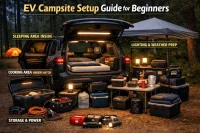
1. Start With a Simple Layout
A clean layout makes everything easier.
What works best for EVs
Sleeping area inside the cabin
Cooking area under the hatch or beside the car
Storage in the trunk, frunk, and under‑floor wells
Lighting placed high for wide coverage
Why this layout works
Keeps the cabin clean
Reduces clutter
Makes setup and tear down fast
Works in small campsites and parking areas
2. Use the Hatch as Your Main Workspace
The hatch is the heart of most EV camping setups.
What to place here
Cooking gear
Water containers
Lighting
Quick‑access storage
Towels and cleaning supplies
Why it works
Easy access
Weather protection
Natural airflow
Great for V2L cooking setups
3. Keep the Cabin Organized
A tidy cabin makes overnight camping far more comfortable.
What belongs inside
Sleeping gear
Clothing
Personal items
Electronics
Low watt fans or heated blankets
Tips
Use soft storage cubes
Keep the floor clear
Store small items in seat‑back organizers
4. Build a Simple Cooking Station
You don’t need a full kitchen — just a clean, safe setup.
Recommended layout
Low watt cooker (Hot Logic, RoadPro, induction, etc.)
Collapsible prep surface
Silicone utensils
Small trash bag
Water jug with spout
Safety notes
No propane inside the vehicle
Keep cables off the ground
Use weatherproof cable covers if it’s wet
5. Manage Power Efficiently
EVs give you more power options than any gas car.
Use the right outlet for the right job
USB → fans, lights, heated blankets
12V → coolers, RoadPro oven
V2L → induction cooktops, kettles
Power stations → multi‑device setups
Keep it simple
Avoid high watt appliances
Use short cables to reduce heat
Split loads across outlets when possible
6. Create a Comfortable Sleeping Setup
Comfort comes from layers, airflow, and smart gear choices.
Essentials
Foam mattress or self‑inflating pad
Down blanket or sleeping bag
USB fan or window vent inserts
Privacy shades or blackout panels
Pro tip
Ventilation prevents condensation — even in winter.
7. Light the Campsite Strategically
Good lighting makes everything easier.
Best placements
Magnetic light bar under the hatch
USB lantern inside the cabin
Headlamp for setup and tear down
LED strip for ambient lighting
Keep wattage low
Most EV campers stay under 10W per light.
8. Keep Gear Accessible
The less you dig, the smoother the trip.
Smart storage zones
Frunk → clean items
Under‑floor wells → tools and cables
Trunk → cooking gear
Seat‑backs → small essentials
What this prevents
Overpacking
Gear pileups
Constant reorganizing
9. Plan for Weather
EVs handle weather well — your campsite should too.
Hot weather
Bug screens
Window vents
USB fans
Shade canopy
Cold weather
Foam insulation
Heated blankets
Warm bedding
Minimal ventilation
10. Keep Setup and Teardown Simple
A beginner EV campsite should take 10–15 minutes to set up.
What helps
Collapsible gear
Soft storage
Pre‑packed kits
Clear zones for each activity
Your Takeaway for Smarter EV Camping
A great EV campsite doesn’t require a ton of gear — it requires a clean layout, smart storage, and low watt tools that work with your vehicle’s power system. Once you dial in your sleeping setup, cooking station, lighting, and organization, every trip becomes easier, faster, and more enjoyable. This beginner‑friendly layout gives you a solid foundation you can build on as your camping style evolves.