

Adapters make it possible to connect tools, chargers, and equipment to outlets that don’t match their plug type. But choosing the wrong adapter can damage your tools, overload a circuit, or create a serious safety hazard. Many homeowners assume adapters are universal — but they’re not. Each adapter has a specific purpose, and using the wrong one can lead to overheating, poor performance, or electrical failure.
This guide explains how to choose the right adapter for your tools and garage equipment in simple, practical steps. Whether you’re powering a tool, charging a battery, or connecting equipment outdoors, these guidelines help you stay safe and avoid costly mistakes.
Step 1: Identify the Plug Type on Your Tool or Charger
Before choosing an adapter, start by identifying the plug type on the device you want to connect.
Most tools and chargers use one of these:
2‑prong plug (ungrounded)
Common for small tools, lights, and chargers.3‑prong plug (grounded)
Required for most power tools, shop vacs, compressors, and metal‑cased equipment.Specialty plugs
Some high‑power tools or appliances use 20A plugs with a horizontal blade.
Never use an adapter to bypass grounding. If your tool has a 3‑prong plug, it needs grounding for safety.
Step 2: Match the Adapter to the Amperage of Your Tool
Every adapter has an amp rating, just like extension cords.
Your adapter must be rated equal to or higher than the tool you’re using.
Typical tool amperage:
Drills: 6–8 amps
Circular saws: 12–15 amps
Shop vacs: 8–12 amps
Compressors: 10–15 amps
Pressure washers: 13–15 amps
If your tool draws 12 amps, you need an adapter rated for at least 12 amps — ideally more.
Using a low‑amp adapter with a high‑amp tool causes overheating and can melt the adapter housing.
Step 3: Choose the Right Adapter Type for the Job
Not all adapters do the same thing. Here are the most common types and when to use them:
1. Grounding Adapters (3‑prong to 2‑prong)
Use only when absolutely necessary.
These remove grounding protection and should not be used with high‑power tools.
2. 15A to 20A Adapters
Used when a tool has a 20A plug but the outlet is 15A.
Only safe for low‑draw tools — never for saws, compressors, or heaters.
3. Outdoor GFCI Adapters
Provide shock protection when working outdoors or in damp areas.
Ideal for:
Pressure washers
Outdoor tools
Wet garages
Basements
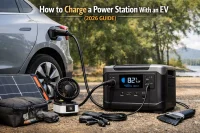
4. EV and Portable Power Adapters
Used for power stations, solar gear, and EV accessories.
These must match voltage and connector type exactly.
5. Multi‑Outlet Adapters
Turn one outlet into two or three.
Safe only for low‑amp devices, not tools.
6. Heavy‑Duty Generator Adapters
Used for RVs, power stations, and backup equipment.
These must match amperage and connector type precisely.
Choosing the wrong type can overload the adapter or damage your equipment.
Step 4: Avoid Adapters That Change Voltage
Some adapters only change the shape of the plug — not the voltage.
This is where homeowners get into trouble.
For example:
A 120V tool cannot be plugged into a 240V outlet using a simple adapter.
A 240V appliance cannot run on a 120V outlet with a plug converter.
If voltage doesn’t match, the tool will burn out instantly.
Only use voltage‑changing adapters if they are true transformers, not simple plug converters.
Step 5: Look for Safety Certifications
Safe adapters should have at least one of these markings:
UL (Underwriters Laboratories)
ETL (Intertek)
CSA (Canadian Standards Association)
These certifications mean the adapter meets electrical safety standards.
Avoid adapters with no markings or unknown brands — they often overheat or fail under load.
Step 6: Choose Outdoor‑Rated Adapters for Outdoor Work
If you’re using tools outside, your adapter must be outdoor‑rated.
Look for:
Thick insulation
Weather‑resistant housing
GFCI protection
“W” marking for outdoor use
Indoor adapters should never be used outdoors — moisture can cause arcing or shock.
Step 7: Avoid Daisy‑Chaining Adapters
Connecting multiple adapters together increases resistance and heat.
Common unsafe combinations include:
Adapter → Adapter → Extension cord
Multi‑plug adapter → Power strip → Tool
3‑prong to 2‑prong → 2‑prong to 3‑prong
If you need multiple adapters to make something work, you’re using the wrong setup.
Step 8: Replace Worn or Damaged Adapters Immediately
Inspect your adapters regularly. Replace them if you see:
Cracks in the housing
Loose prongs
Burn marks
Melted plastic
Wiggling connections
Overheating during use
Adapters are inexpensive — replacing them is always safer than trying to repair them.
Final Takeaway
Choosing the right adapter is essential for safe, reliable power in your garage and around your home. By matching the adapter to your tool’s plug type, amperage, and environment — and avoiding unsafe combinations — you protect your equipment and reduce the risk of overheating or electrical hazards. A good adapter setup keeps your tools running smoothly and your garage safer.