


Even the Best EV Road Trips Hit Surprises
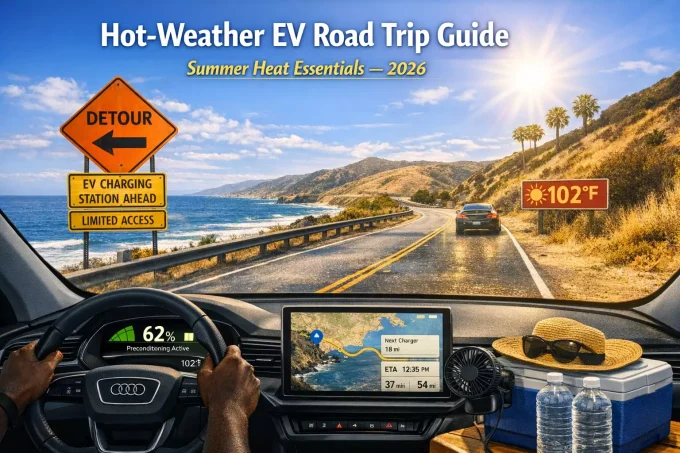
Road trips always come with curve balls — traffic jams, closed exits, broken chargers, unexpected weather, or detours that add miles. EVs handle these situations well, but only if you know how to adapt quickly. The key is flexibility: having backup options, reading the situation early, and using your tools to stay ahead of problems.
This guide gives you a simple, reliable system for handling the most common EV road‑trip disruptions.
1. Always Keep a Backup Charger in Mind
The easiest way to eliminate stress is to know your Plan B.
What experienced EV drivers do
Identify 1–2 alternative chargers near every planned stop
Prefer areas with multiple networks (EA + EVgo + Tesla)
Avoid relying on a single rural station
Why it matters
Backup options turn “charger anxiety” into a non‑issue.
2. Check Charger Status Before You Arrive
A 10‑second check saves 30 minutes of frustration.
What to look for
Recent check‑ins
Reported outages
Photos of the station
Real charging speeds
Best tools
PlugShare
Network apps (EA, EVgo, ChargePoint)
Why it matters
You avoid slow or broken chargers before they become a problem.
3. If a Charger Is Full, Don’t Wait — Move On
Time is more valuable than a perfect charging curve.
Smart alternatives
Drive to the next station
Switch networks
Charge at a slower station temporarily
Why it matters
Waiting in line is almost never the fastest option.
4. Use Eco Mode When You Need Extra Buffer
A quick efficiency boost when plans change.
Why EV drivers rely on it
Smooths acceleration
Reduces energy use
Helps stretch range to the next charger
When to use it
Unexpected detours
Long gaps between stations
Heavy traffic
5. Slow Down 5–10 MPH to Extend Range
Small speed changes make a big difference.
Why it works
Highway speed is the biggest energy variable
Even a small reduction adds meaningful miles
Helps you reach the next charger comfortably
Real‑world feedback themes
“Slowing down saved the day”
“Gained 10–20 miles instantly”
6. Use Regenerative Braking on Downhills
Free energy when you need it most.
Best practices
Increase regen on descents
Anticipate stops
Avoid riding the brakes
Why it matters
Regen can add enough miles to reach the next station.
7. If a Detour Adds Miles, Recalculate Immediately
Don’t wait until you’re committed.
What to do
Re‑run your route in ABRP or your EV’s planner
Check elevation changes
Look for new charging options
Adjust speed if needed
Why it matters
Early recalculation prevents range surprises.
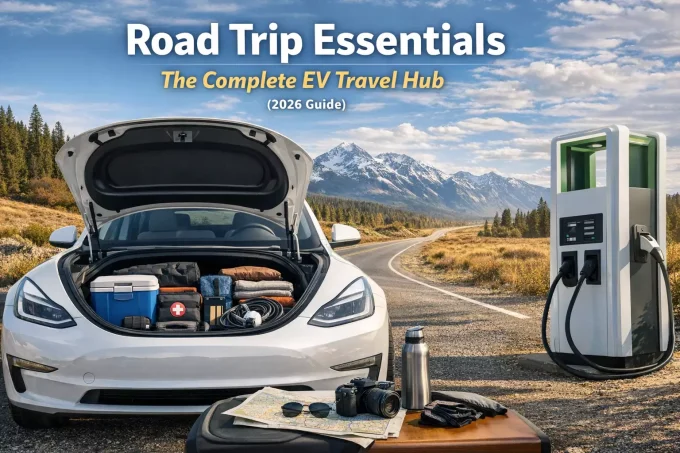
8. Keep Charging Gear Organized and Accessible
You don’t want to dig for adapters during a stressful moment.
Must‑have items
NACS ↔ J1772 adapter
CCS adapter (if compatible)
Portable Level 1/2 charger
RV adapters
Heavy‑duty extension cord
Why it matters
Backup charging becomes effortless when everything is easy to reach.
9. If a Charger Is Slow, Try Another Stall
One bad stall doesn’t mean the whole station is bad.
Why it works
Some stalls under perform
Switching often fixes the issue
Networks recommend this as standard practice
Best practice
Try a new stall before giving up on the station.
10. Stay Calm — EVs Give You More Options Than You Think
Modern EVs have excellent buffers and predictable energy use.
What helps
Cruise control
Eco mode
Moderate speeds
Smart route tools
Backup chargers
Why it matters
EVs are more resilient than most drivers expect.
How to Build a Trouble‑Proof EV Road Trip Strategy
1. Always have a Plan B
Backup chargers eliminate stress.
2. Recalculate early
Don’t wait until the battery is low.
3. Adjust speed when needed
Small changes add big range.
4. Keep charging gear accessible
Adapters solve most problems.
5. Stay flexible
Detours and delays are part of the journey.
A Confident Final Note
Unexpected delays and detours don’t have to derail an EV road trip. With backup chargers, smart efficiency habits, and a calm, flexible approach, you can handle any surprise the road throws at you. This guide gives you a simple, reliable system for staying in control — no matter what happens along the way.