

Long‑distance EV driving isn’t just about battery size — it’s about how you manage speed, elevation, and terrain. Highways, steep climbs, rolling hills, and mixed driving conditions all affect efficiency differently. The good news: with the right habits, you can dramatically extend your range without slowing to a crawl or changing your route.
This guide breaks down how each type of terrain affects energy use and gives you practical, real‑world strategies to get the most miles out of every charge.
1. How Highways Affect EV Range (and How to Drive Efficiently)
Highway driving is where most EV drivers lose the most range — not because of distance, but because of aerodynamic drag. Above 55 mph, drag increases exponentially, and efficiency drops fast.
What Happens at Highway Speeds
Air resistance becomes the dominant energy load
Small speed increases cause large efficiency losses
Climate control has a bigger impact at high speeds
Regenerative braking is minimal because you rarely slow down
For a deeper breakdown of how terrain and elevation change your efficiency, see this guide on maximizing range on highways and hills.
How to Maximize Range on Highways
Drive 60–70 mph instead of 75–85 mph
(This alone can add 10–25% more range.)Use cruise control to maintain steady speed
Close windows to reduce drag
Remove roof racks or cargo boxes
Use Eco mode to soften acceleration
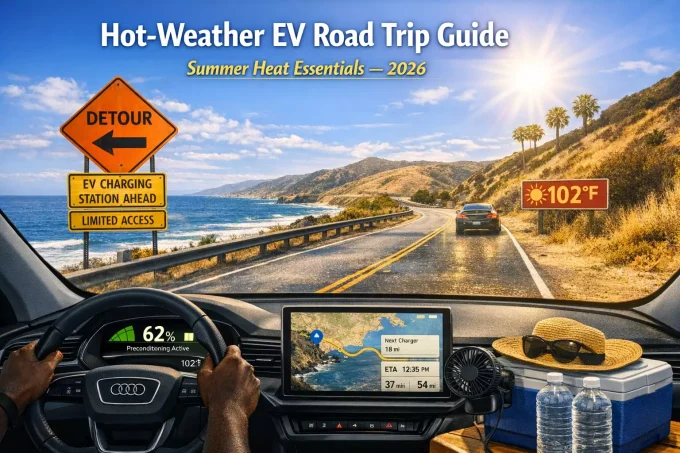
Precondition the cabin before departure
You can build even better habits by checking out these EV road‑trip efficiency tips, which break down how speed and driving style affect long‑distance range.
Best Highway Strategy
Hold a steady, moderate speed.
Avoid unnecessary lane changes and rapid accelerations.
2. How Hills and Elevation Changes Affect Range
Climbing hills is one of the most energy‑intensive things an EV can do — but descending hills is where EVs shine.
What Happens on Uphill Climbs
Motor works harder to overcome gravity
Energy use can double on steep grades
Battery temperature may rise on long climbs
What Happens on Downhill Descents
Regenerative braking recovers energy
Efficiency spikes
Battery may limit regen if full or cold
If your route includes long climbs or rolling terrain, this guide on driving efficiently across mixed terrain can help you plan smarter.
How to Maximize Range on Hills
Build momentum before the climb
(A gentle speed increase before the hill reduces load.)Avoid flooring the accelerator on steep grades
Use “B mode” or high‑regen on descents
Don’t crest a hill at high speed
(You waste energy you won’t get back.)Let regen slow you naturally instead of braking hard
Best Hill Strategy
Let the car work with gravity, not against it.
Smooth inputs = maximum regen.
3. How Mixed Terrain Affects Range
Mixed terrain — rolling hills, curves, stop‑and‑go pockets, and variable speeds — creates unpredictable energy use.
What Happens in Mixed Terrain
Frequent speed changes reduce efficiency
Regen helps, but only if you drive smoothly
Climate control cycles more often
Tires heat up and increase rolling resistance
How to Maximize Range on Mixed Terrain
Use gentle acceleration and early regen
Look ahead and anticipate terrain changes
Maintain momentum on small hills
Avoid unnecessary braking
Use Eco mode for smoother throttle response
Keep tires properly inflated
Best Mixed‑Terrain Strategy
Drive like you’re carrying a full cup of coffee — smooth, predictable, and controlled.
4. Climate Control Tips for All Terrain Types
HVAC can be a major range drain, especially at high speeds or in extreme weather.
To Maximize Range
Use seat heaters instead of cabin heat
Use fan‑only mode when possible
Precondition while plugged in
Crack a window at low speeds, not high speeds
Use recirculate mode in hot weather
5. Battery Management Tips for Long Terrain Changes
Your battery performs differently depending on temperature, load, and elevation.
Best Practices
Start your trip with a warm battery
Avoid charging to 100% before long descents
(Regen will be limited.)Plan charging stops before major climbs
Avoid deep discharges on mountainous routes
6. When to Adjust Your Speed for Maximum Range
Speed is the single biggest factor in range loss.
Slow down when:
You’re climbing long grades
You’re facing strong headwinds
You’re low on charge
You’re towing or carrying heavy cargo
Maintain speed when:
You’re descending
You’re in rolling hills
You’re in mild temperatures
7. Real‑World Driving Examples
Highway Example
75 mph → 60 mph
Range gain: 15–25%
Mountain Example
Long climb + long descent
Net range impact: Often neutral if driven smoothly
Mixed Terrain Example
Rolling hills + curves
Range impact: Highly dependent on throttle discipline
8. Quick Checklist for Maximizing Range Anywhere
Drive 60–70 mph on highways
Build momentum before hills
Use regen on descents
Keep acceleration smooth
Precondition before departure
Use Eco mode
Keep tires inflated
Remove roof racks
Avoid unnecessary braking
Use seat heaters instead of cabin heat